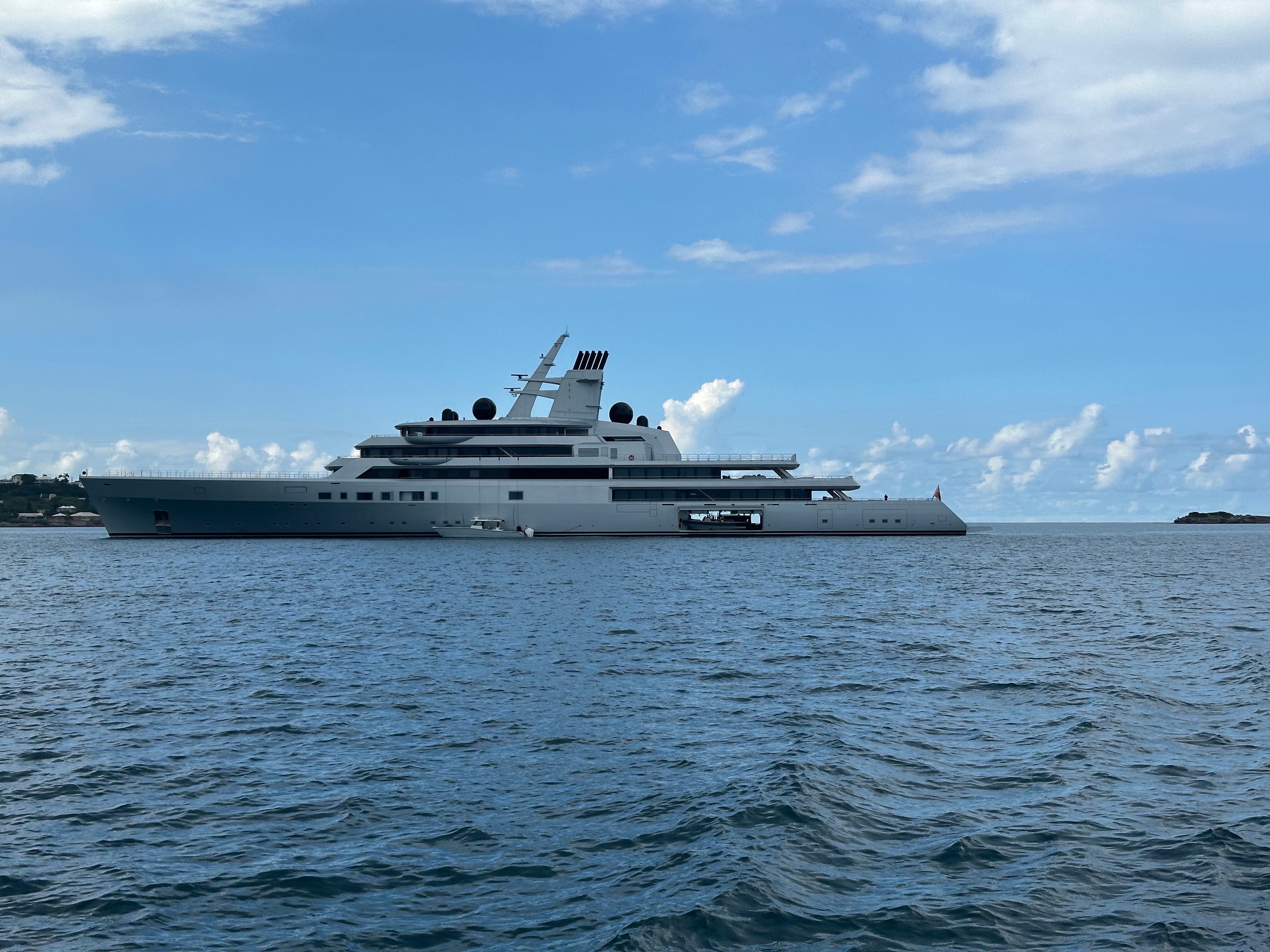
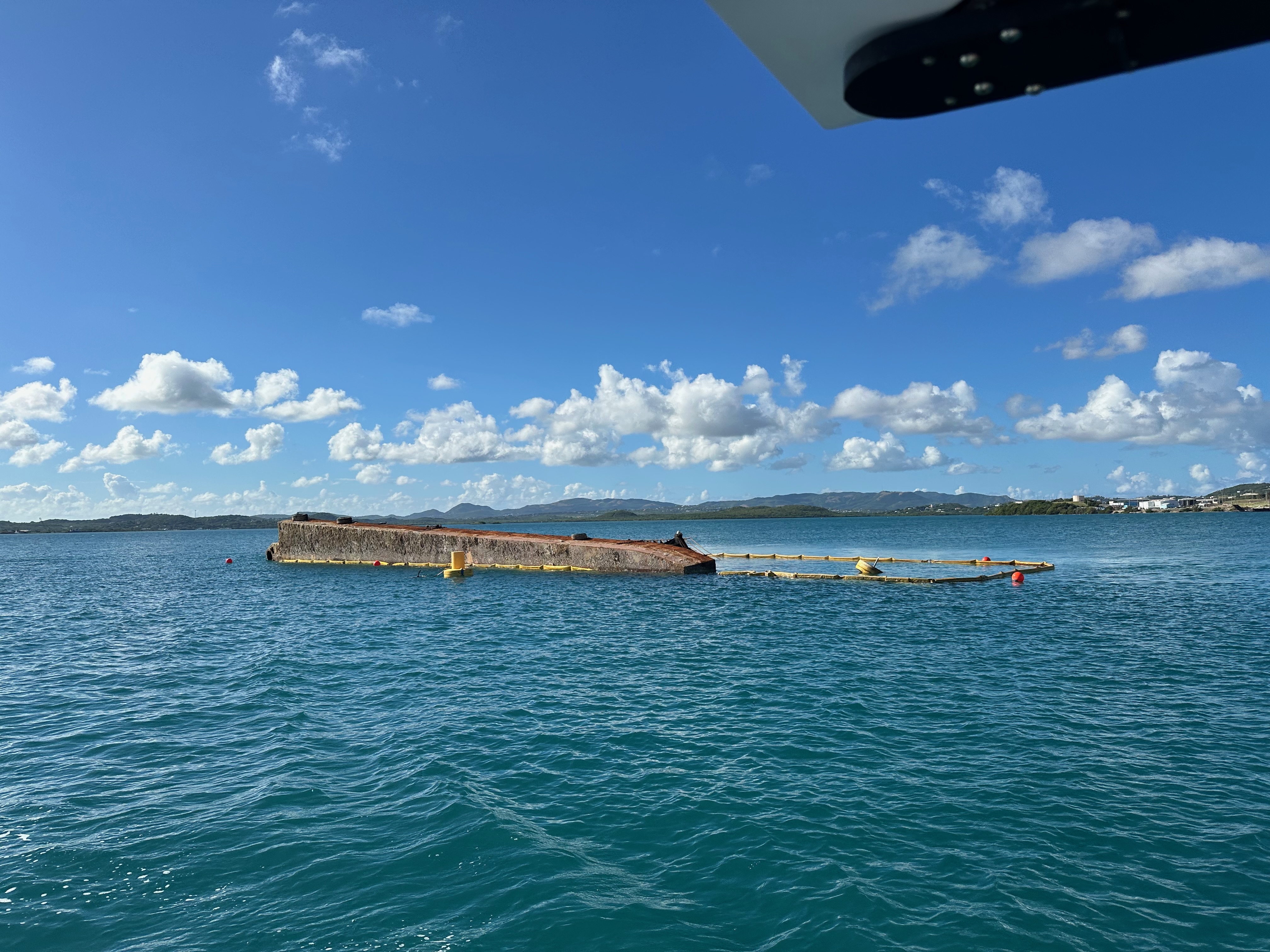
With a bunch more boat jobs done and plenty of provisions on board, we set off to spend some time in remote places. Our first stop was Great Bird Island, on the northeast side of Antigua. The approach is challenging, with several shallow spots, reefs galore and a narrow channel with a sunken barge conveniently in the middle of it! The route passes by Jumby Bay resort, a high-end resort popular for superyachts to pick up or drop off guests, since it is close to the airport. Those in the know (and willing to pay the price) are whisked past the endless customs and immigration lines and straight to their boats. On this trip we saw Dragonfly, a mere 466 feet long, with two helipads (because really, one is never enough).

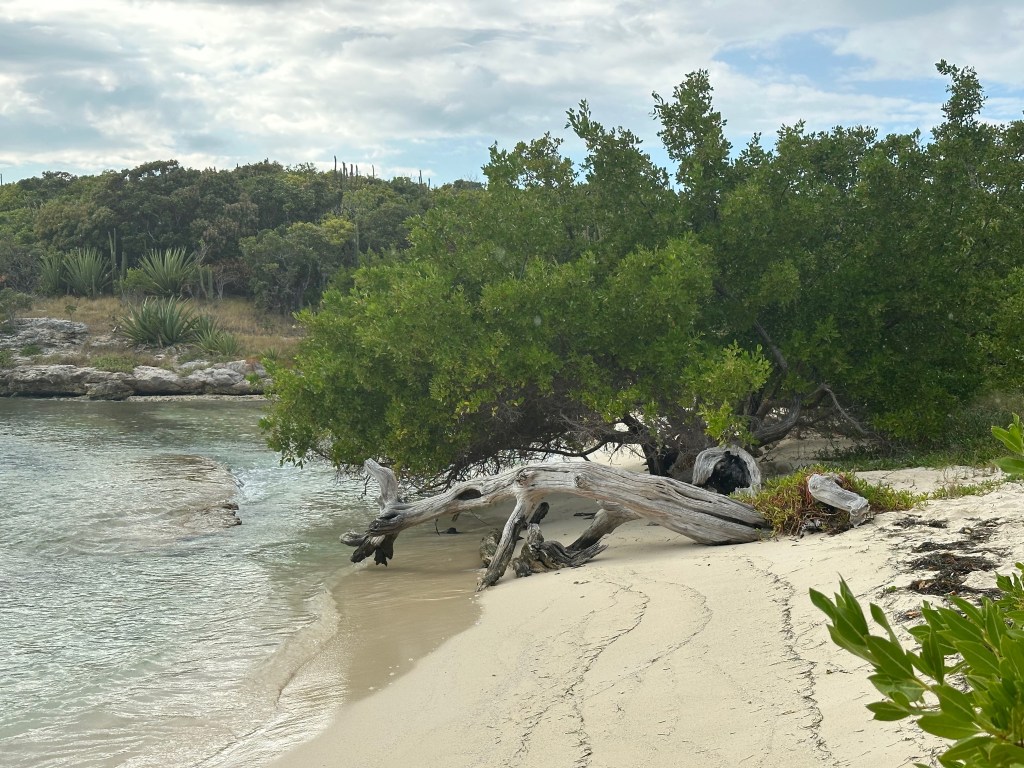
Having successfully navigated in, we found ourselves in a wonderful quiet bay, protected by reefs, with interesting little islands to explore and some nice sea life. Great Bird itself is partly privately owned, but is beautifully clean and looked after, so we happily paid to climb a steep staircase to the top and admire the views. Winds were light, so my paddle board got some use, too. We were thrilled to see an eagle ray, but unfortunately weren’t quick enough to get a photo. Great Bird Island is also known for its successful efforts to restore the native Antiguan Racer snake, with numbers having increased from around 50 to over 1000 in the past 30 years. I wasn’t sorry not to see one!

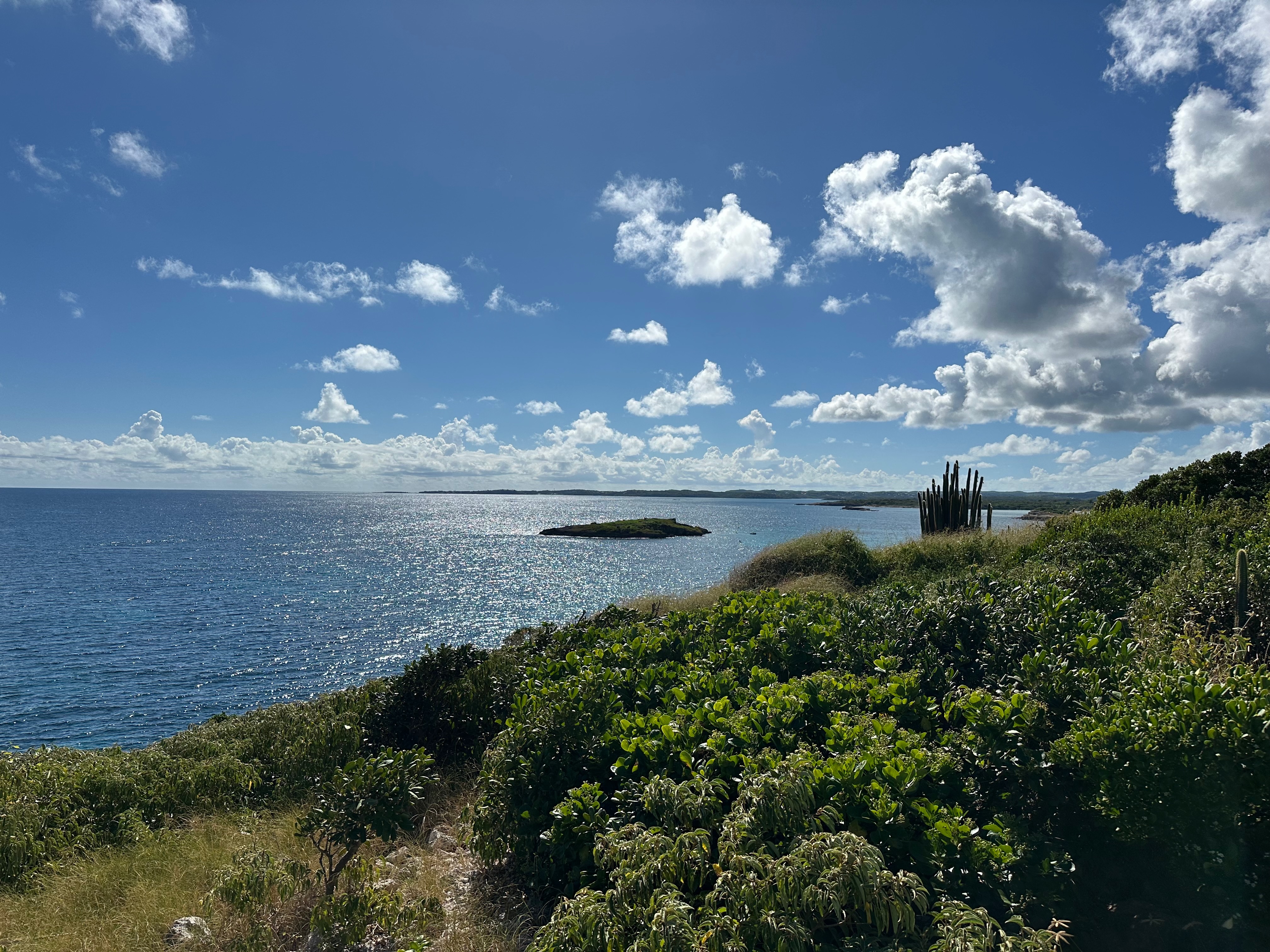

After Great Bird, we wound our way back out through the channel and headed north to Barbuda. This quiet island is part of Antigua and Barbuda, and has an area about as large as Antigua, but only about 1700 people live there. All of the land is commonly owned by the residents, meaning that it can’t be sold to overseas investors. The island was devastated by Hurricane Irma in 2017, but is being carefully rebuilt. Due to some shady deals with the rich and famous, the tiny airstrip has been replaced by one more suited to executive jets, some very expensive houses have been built, and there is a constant stream of helicopters coming and going to the outpost of Nobu restaurant ($700 for lunch!). For the most part the locals aren’t pleased, and there are lawsuits underway to stop further development. I hope they’re successful.
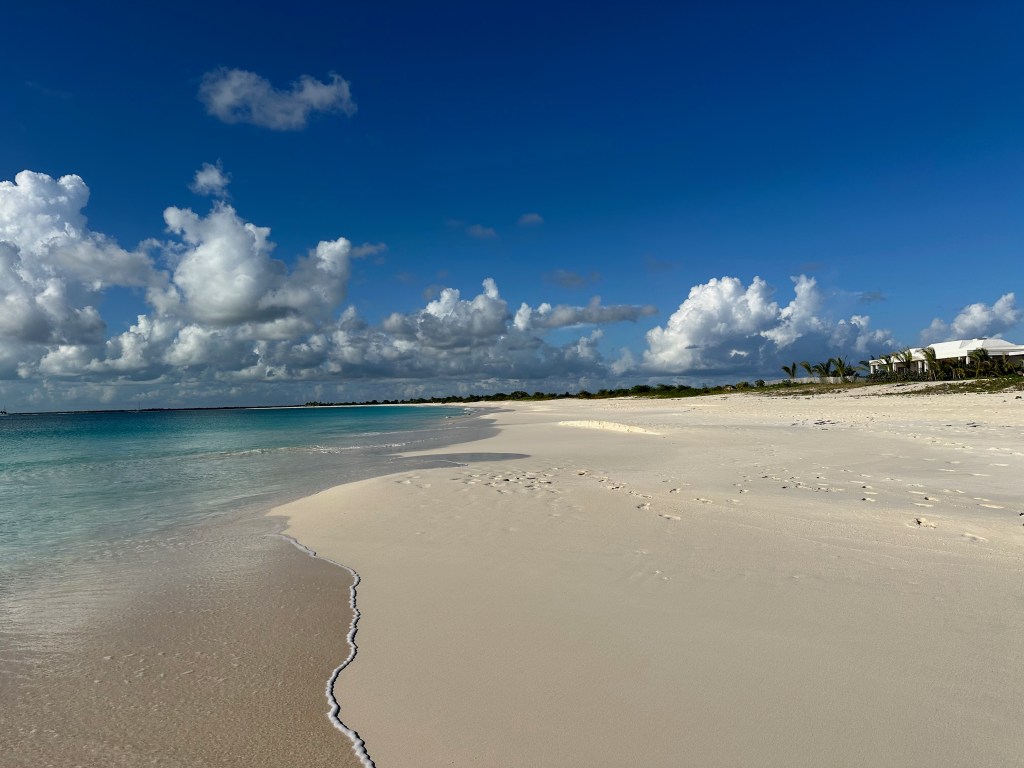
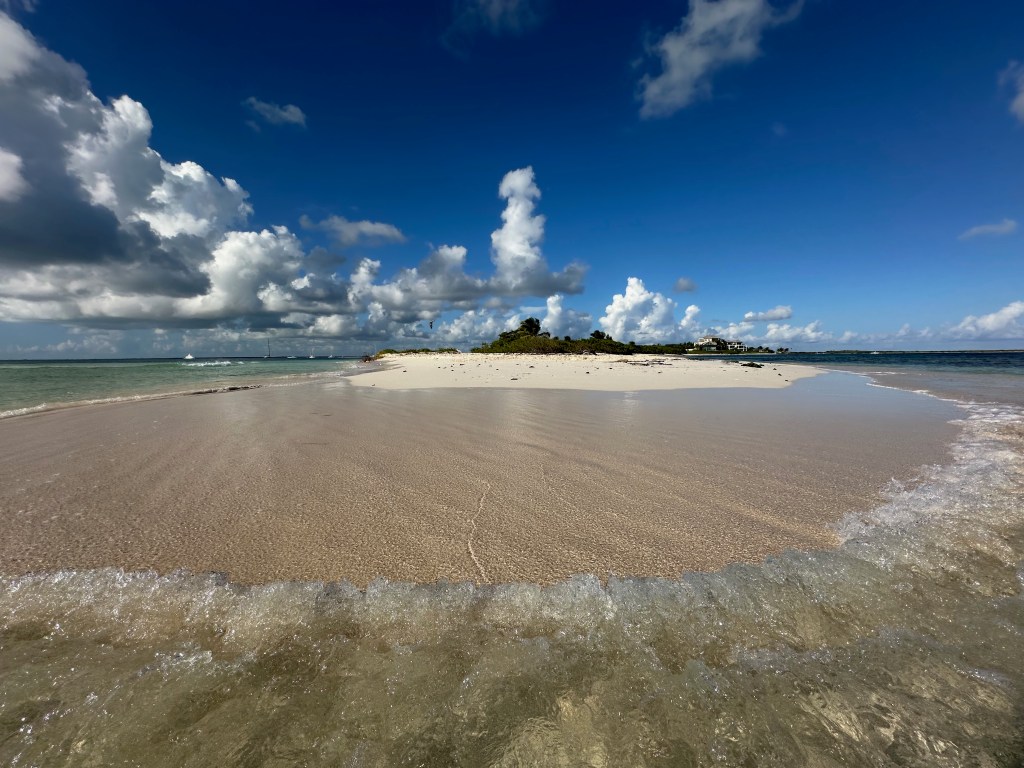
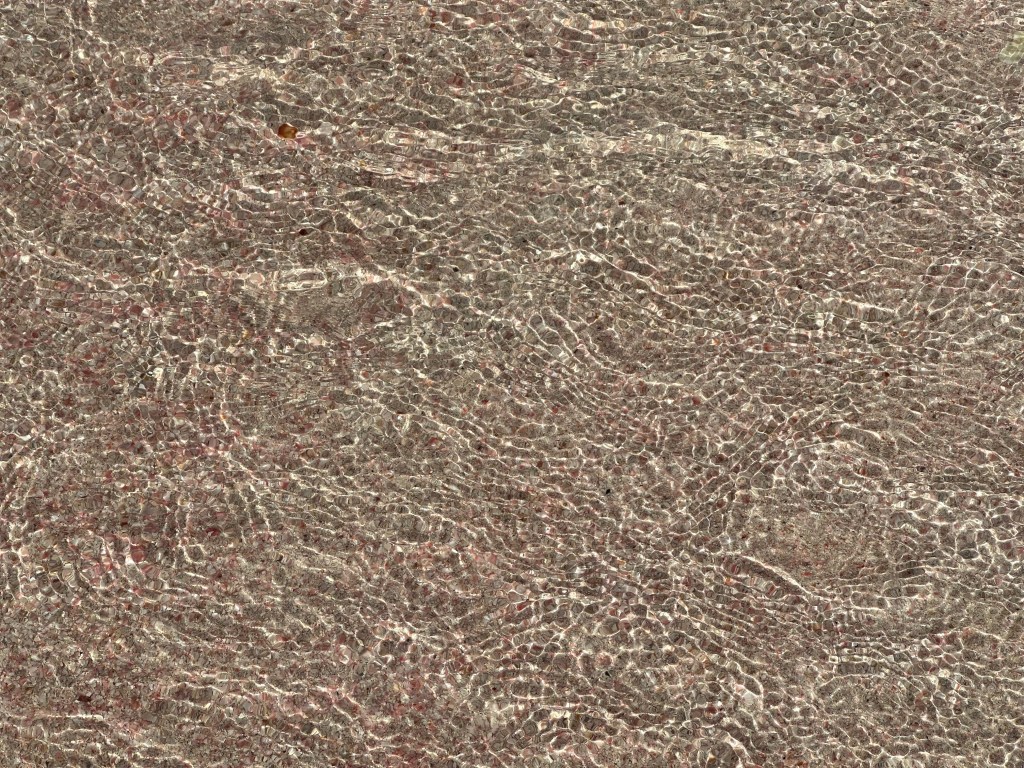
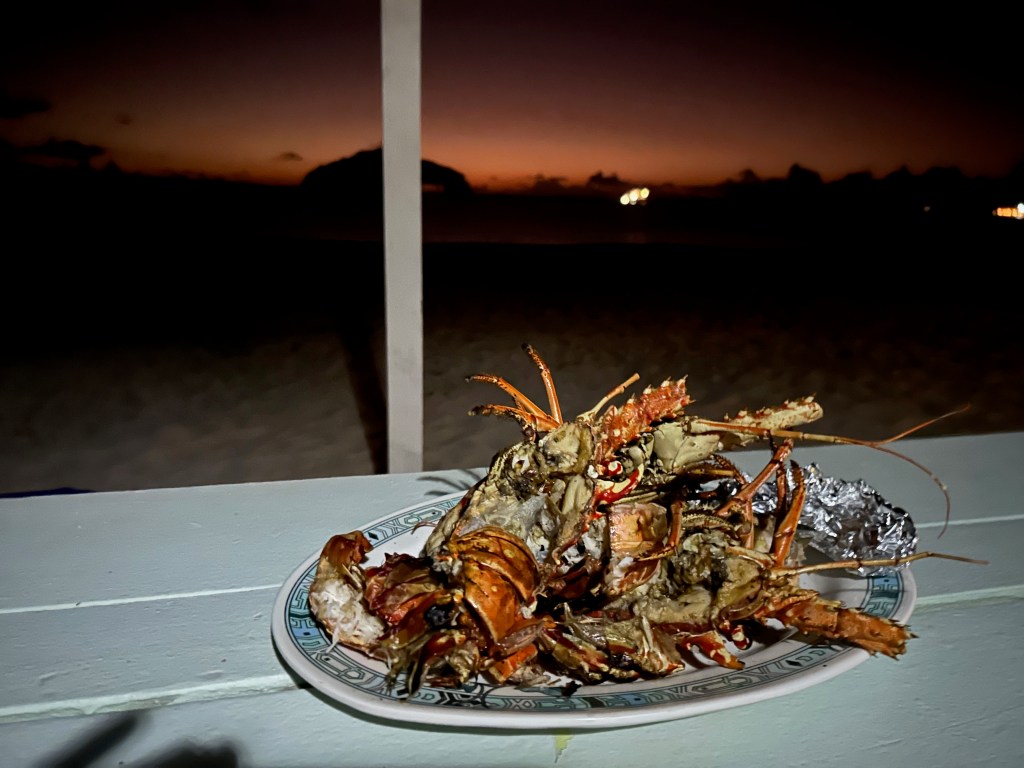
Barbuda is famous for its endless pink sand beaches. We anchored off Princess Diana beach near Cocoa Point. We took the dinghy ashore and walked for miles. Later that evening we went back ashore for sunset cocktails and a lobster barbecue at Shak-a-Kai. Unfortunately, it wasn’t until after we’d hauled the dinghy up the beach that I realized I’d forgotten to bring our plates, knives and forks with us (Shak-a-Kai is rustic!). Not wanting to drag the dinghy back down, I decided to swim back to the boat, pick up what we needed and swim to the beach again. It was slightly concerning swimming back it what was now deepening twilight, especially as groups of fish leapt in front of me and I wondered what was down there making them jump. However a friendly turtle stuck its head up nearby and reassured me! Obviously by the time I was back, sunset was long past, and our lobster was ready, so this wasn’t going to be a lingering evening. Anyway, two rum punches and some excellent lobster slipped down very nicely and the evening ended well.
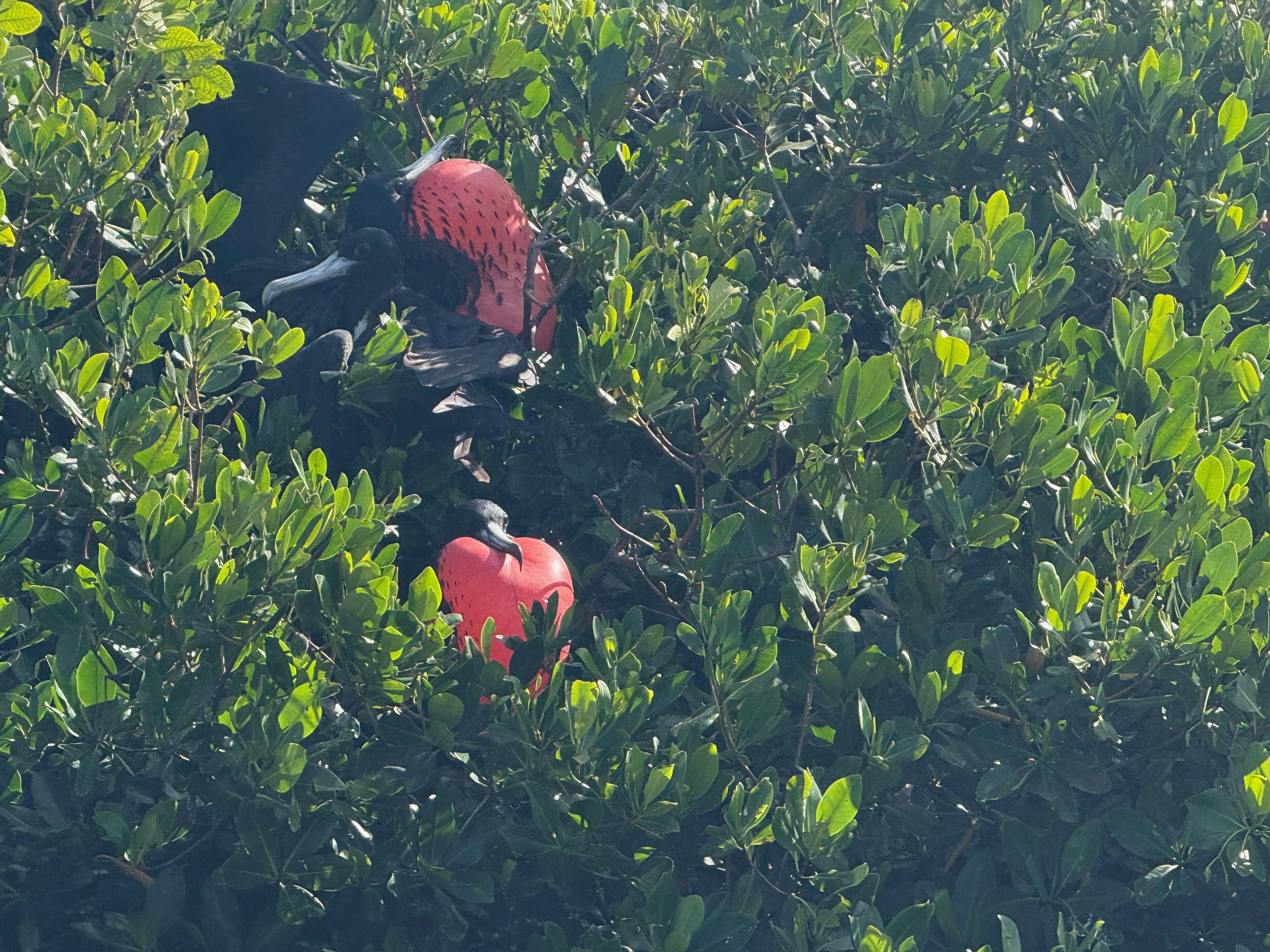
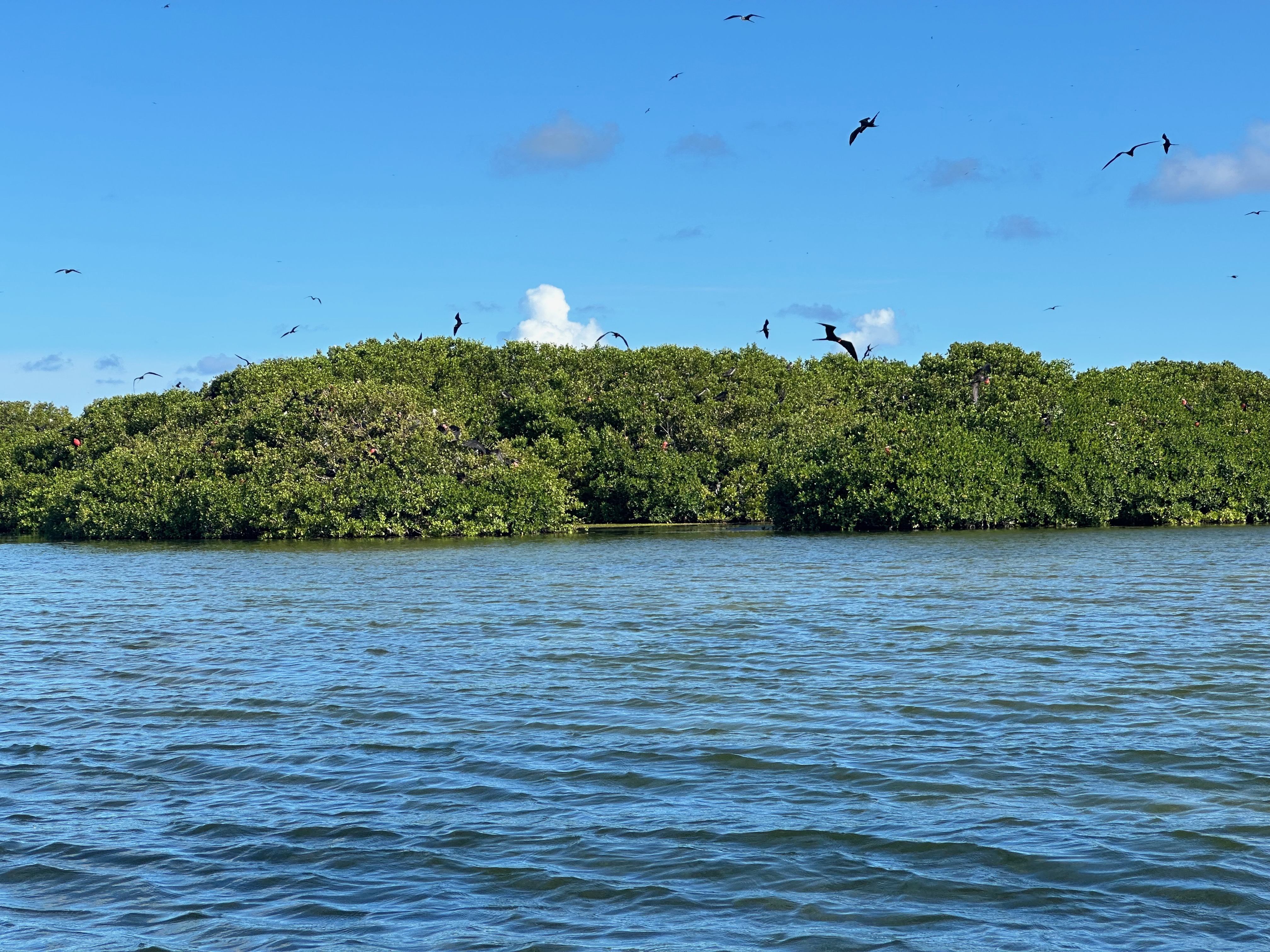
Next day we had arranged a tour of the Frigate Bird colony. Thousands of frigate birds nest in the lagoon at the north end of the island. Our guide was Pat Richardson, who is highly regarded for his knowledge of and advocacy for the local ecology. The male frigate birds are all black, except for a scarlet sac on their necks which they inflate to attract females. Pairs make tiny nests – no more than a few twigs – in which the female lays her egg. The male then takes care of the chick while the female hunts for food. Most of the frigate birds we see out at sea (sometimes hundreds of miles out) have white heads, which distinguishes them as females. Their wings aren’t strong enough to take off from the sea, so they grab flying fish or other fish on the surface, or will sometimes attack another bird to make it regurgitate food for them to steal. Then back to the nest to share with their mate and chick. Some of them migrate as far as the Galapagos. Anyway, it’s incredible to see such a concentration of them, and it seems that conservation efforts are paying off.

After our tour we cleared customs, tracked down some ice, and were ready to move on early the next day. Barbuda is a beautiful island and deserves the name the locals give it – BarBeautiful!

 SAILING YACHT PERSEPHONE