
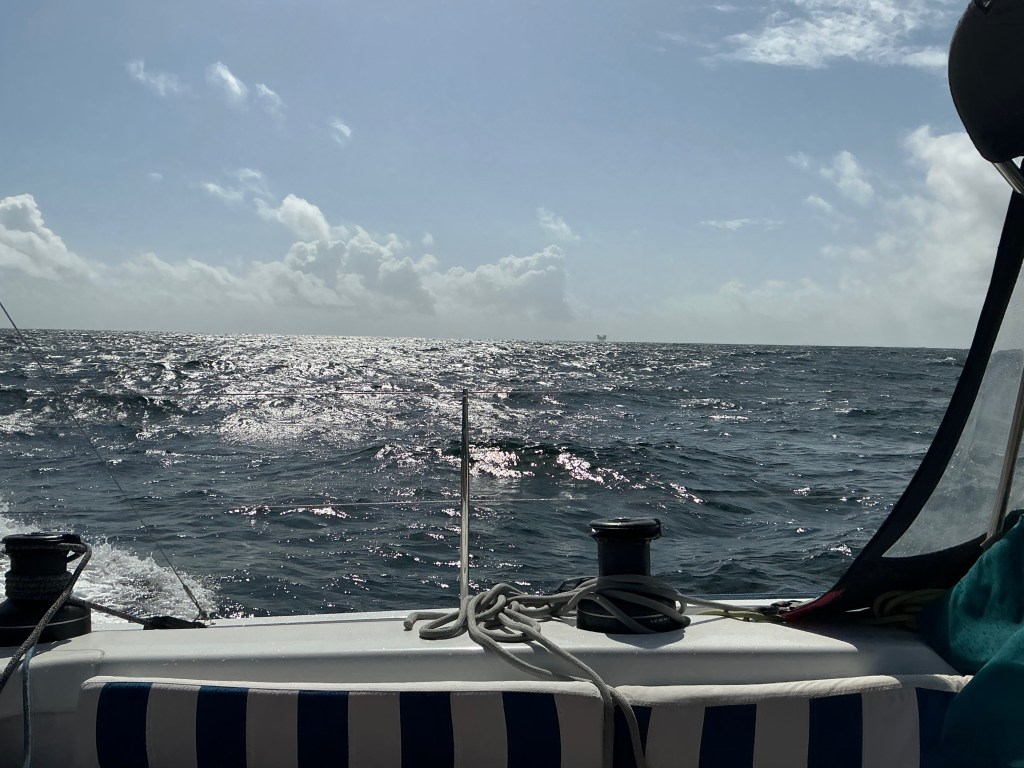
We left Grenada around 2am to sail down to Trinidad. We expected to take roughly 12 hours for the passage and wanted to arrive with plenty of daylight; at the same time our route took us only 5 miles from Venezuela, and given reports of piracy we didn’t want to be doing that part of the trip overnight. During the night we saw plenty of shooting stars, as well as a lot of planes flying low on parallel tracks – we wondered if that was some sort of US military operation. Two knots of adverse current made for a bumpy ride, but we had a nice reach down and made it roughly on schedule. On the way we passed two gas rigs. The north coast of Trinidad is ruggedly beautiful and is mostly national park.
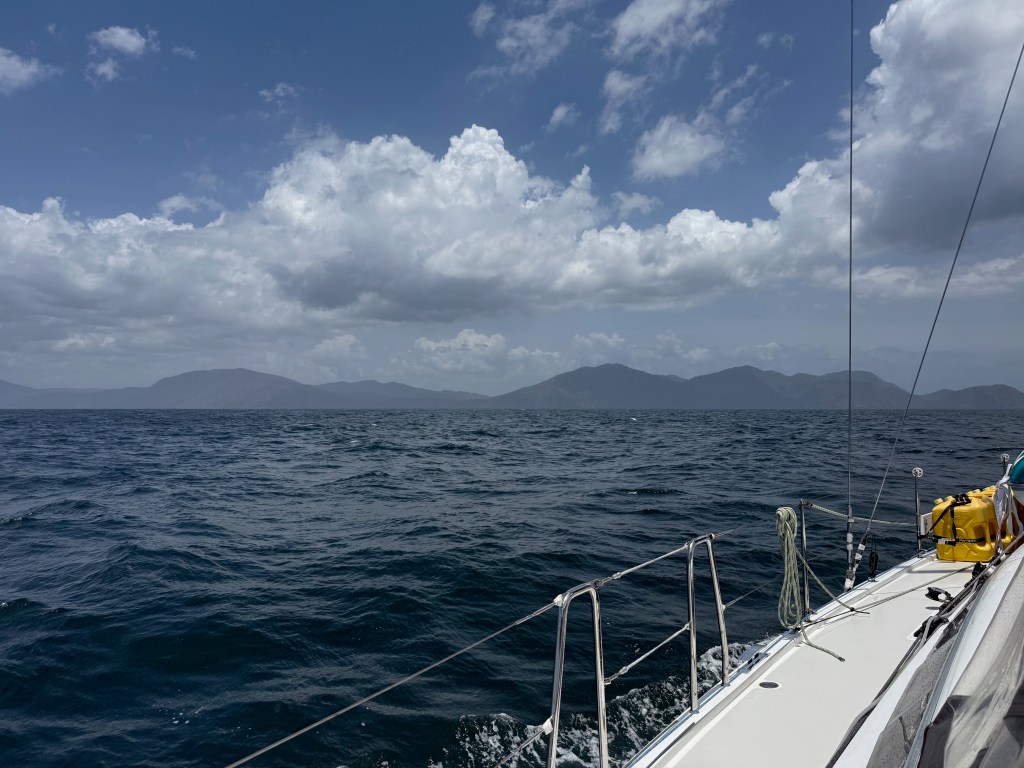
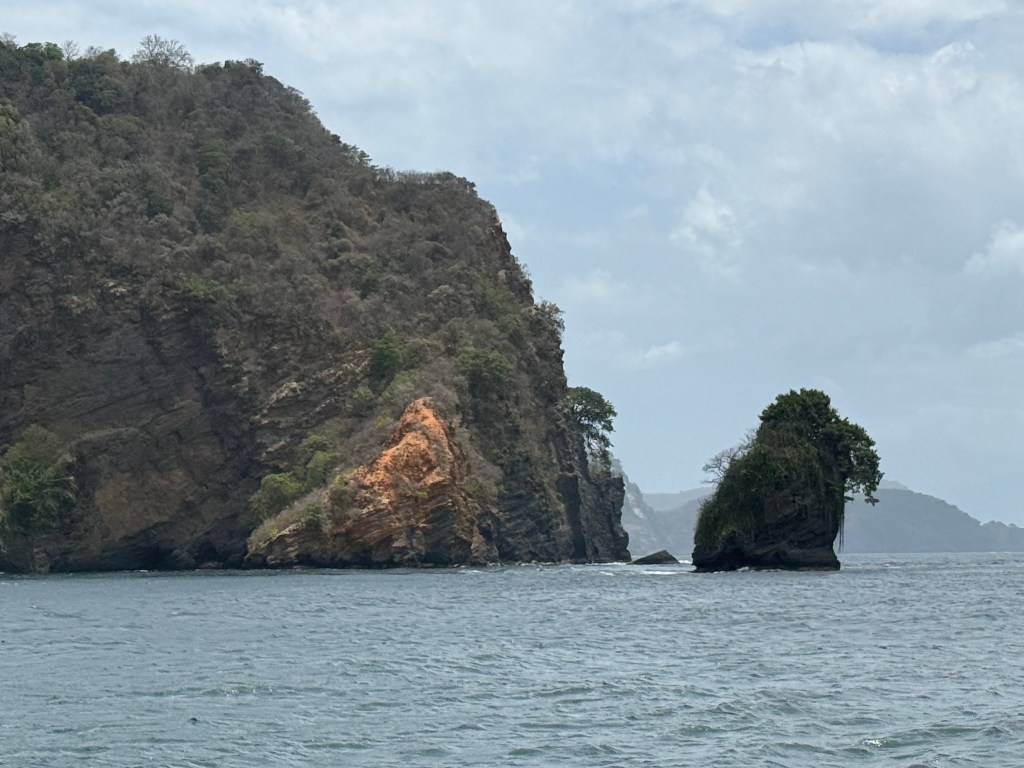
We came into Chaguaramas, where there are several boatyards. Upwards of 1,000 boats spend rainy season here. It is south of the hurricane belt (lower hurricane risk than Marblehead!) and reputedly a great place to get work done. We are at Peake Yacht Services, which seems incredibly well organized and the staff are super helpful. They also have a small, basic hotel in the yard which was very convenient. After an early supper we fell into bed in our air-conditioned room and slept for 10 hours!
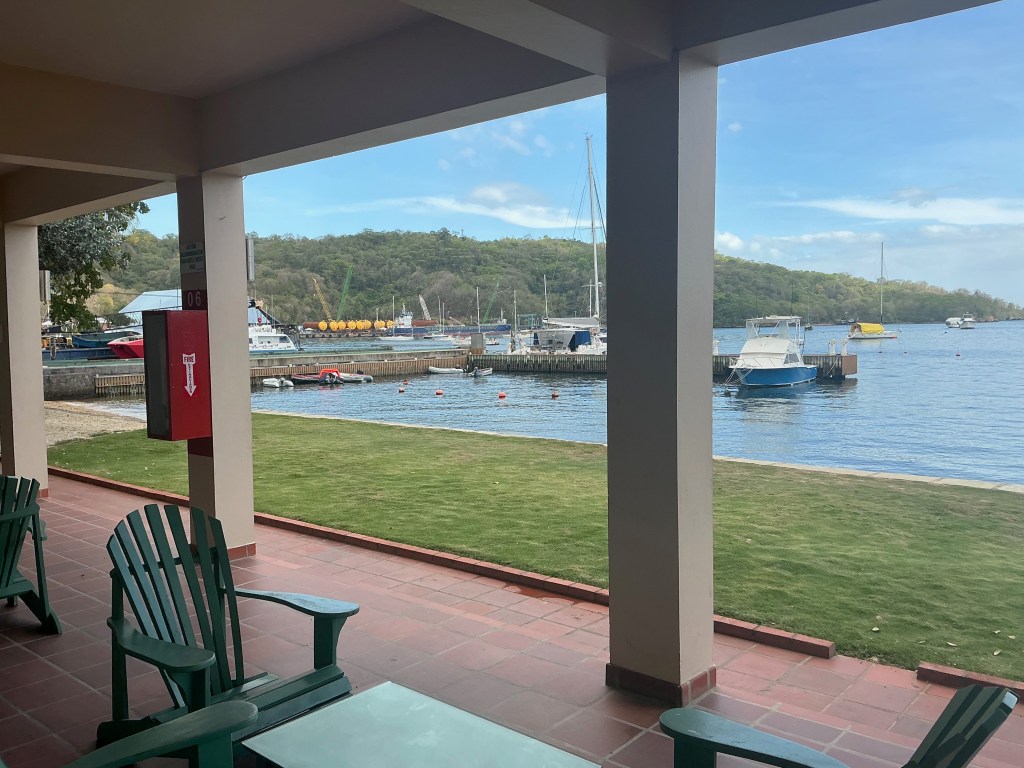
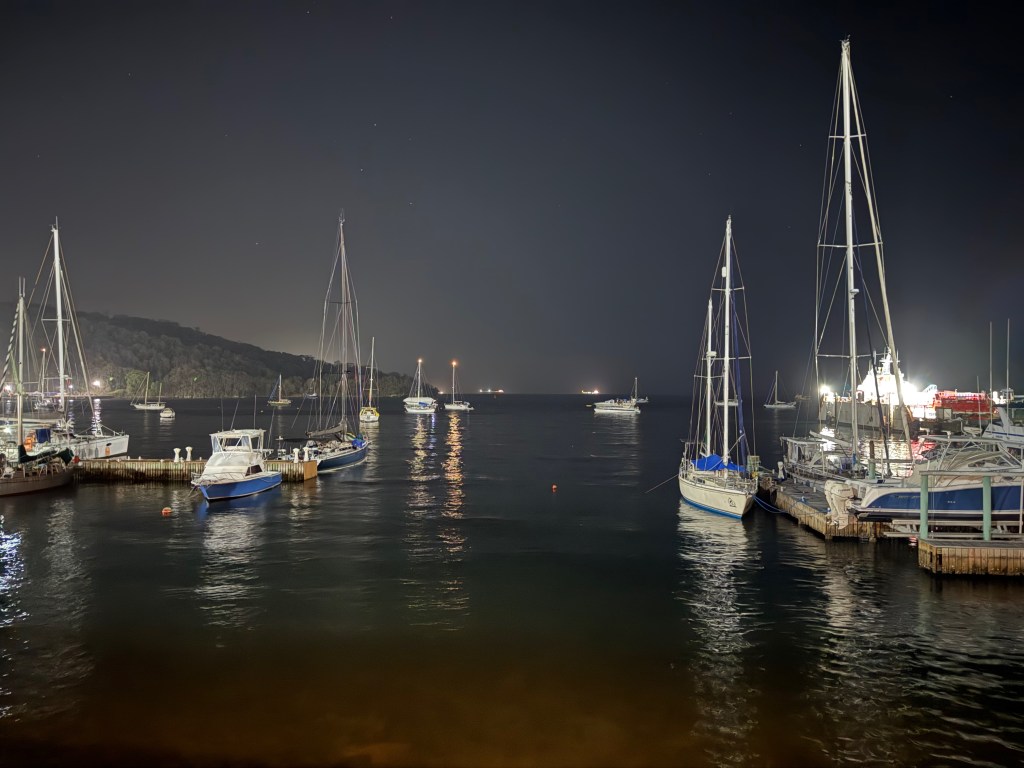
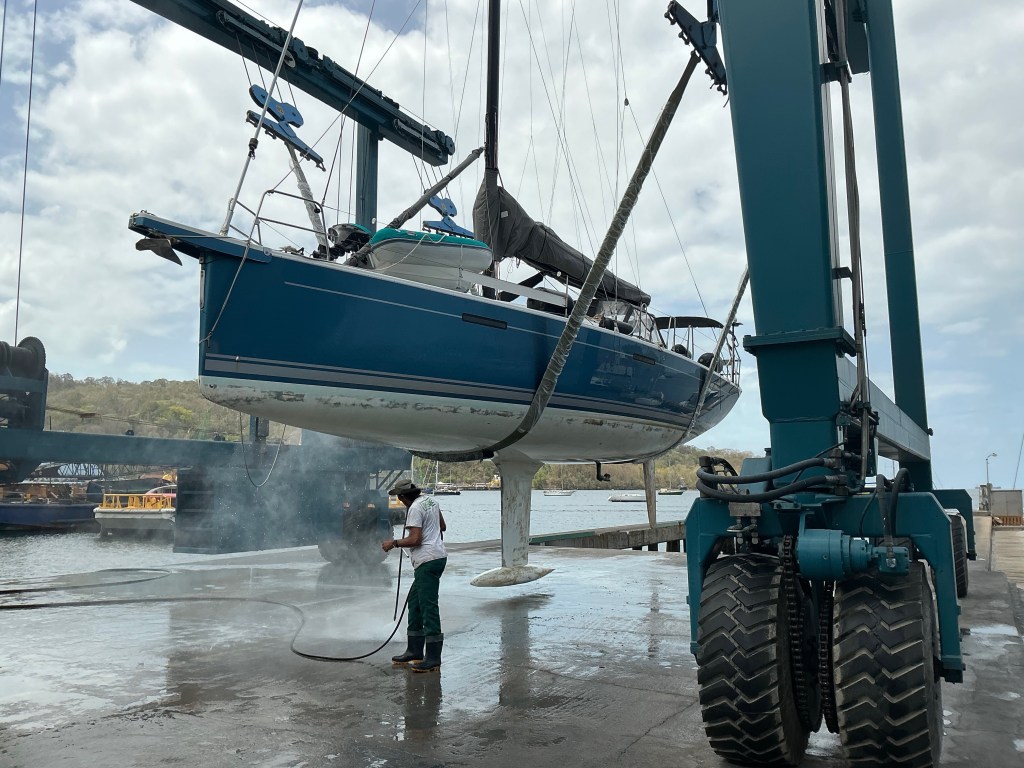
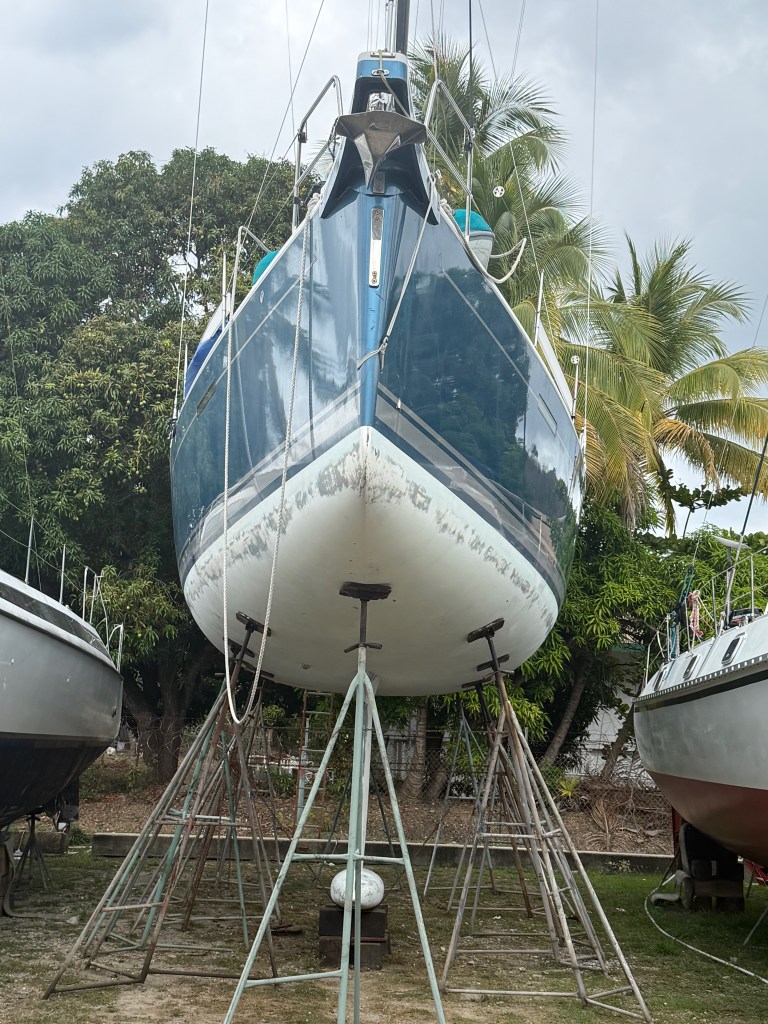
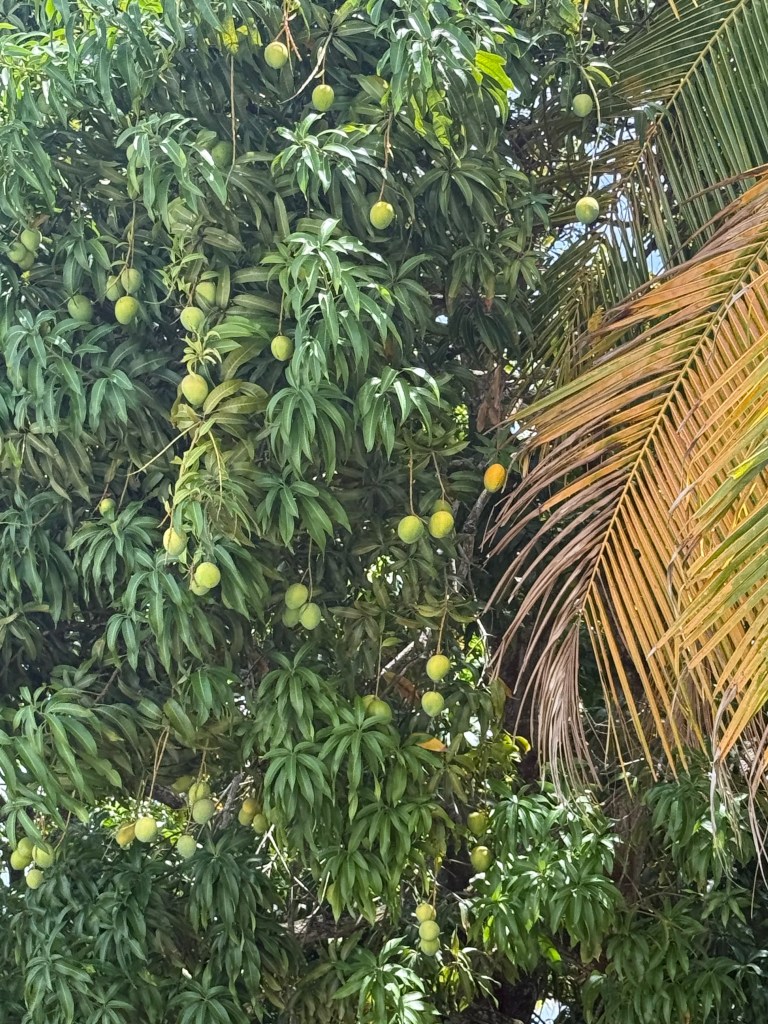
We had a couple of days with the boat on a dock while we sorted things out, and then we were hauled out on the 15th and moved to our spot in the boatyard. This is always a bit nerve-wracking but the yard did a great job and we made it without drama. Our boat is right next to a stand of mango trees – hopefully far enough away from them that we’re not going to come back to a complete mess! The boatyard guys picked me about a dozen mangos. Have I mentioned that I love mango season?
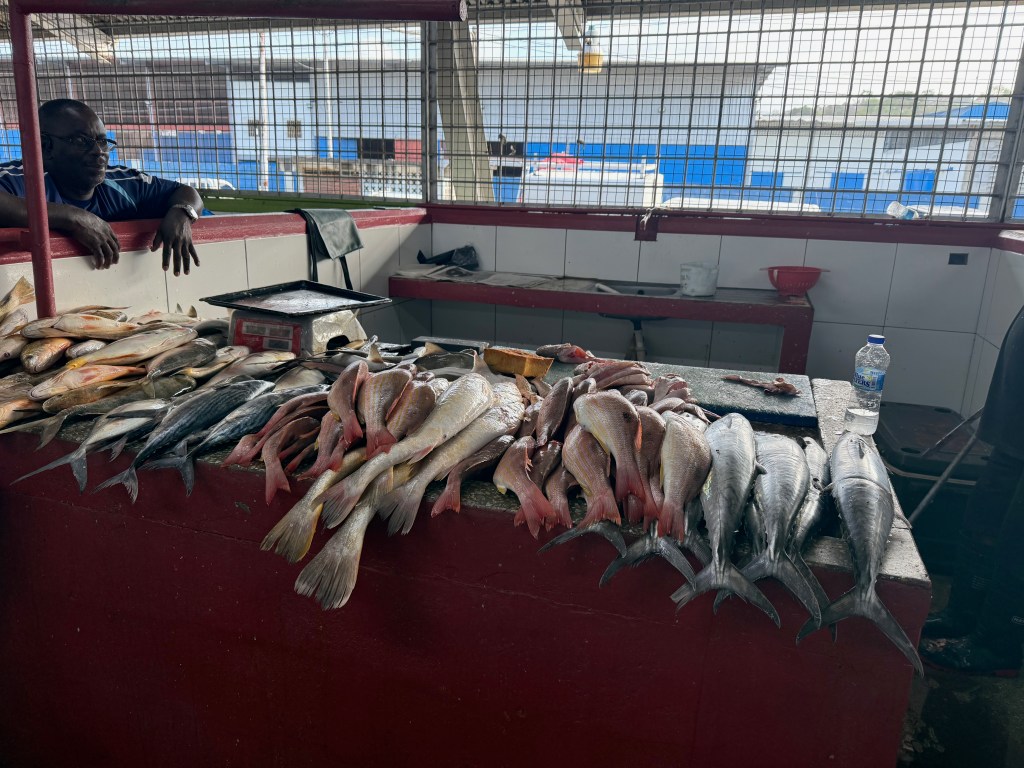
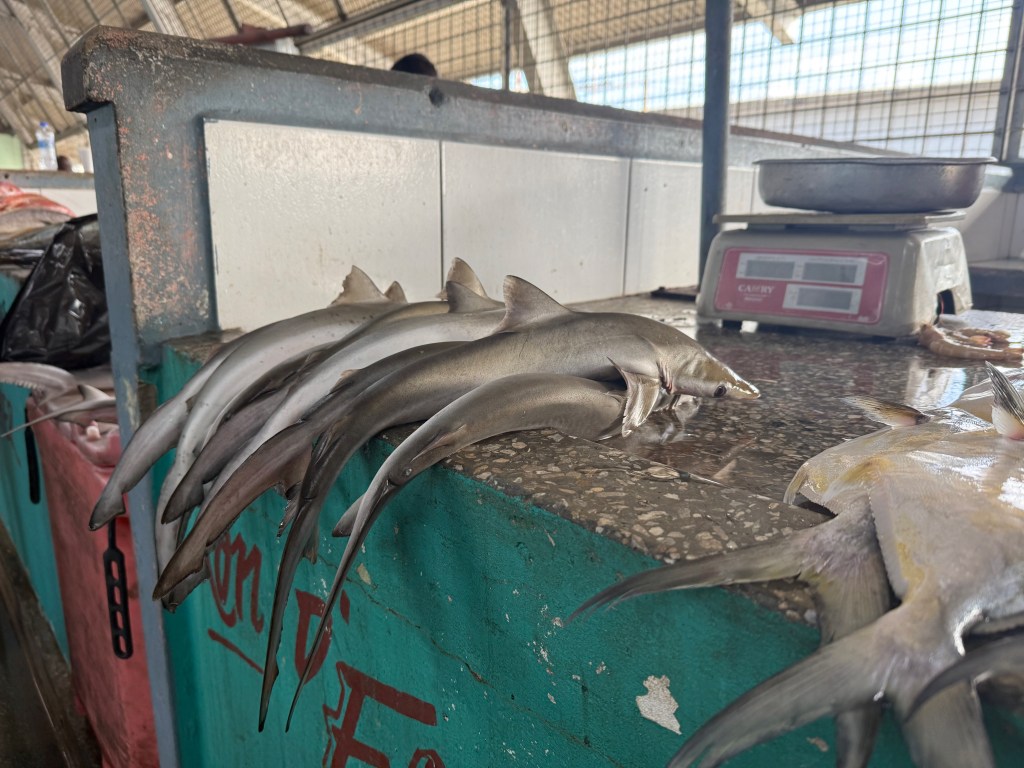
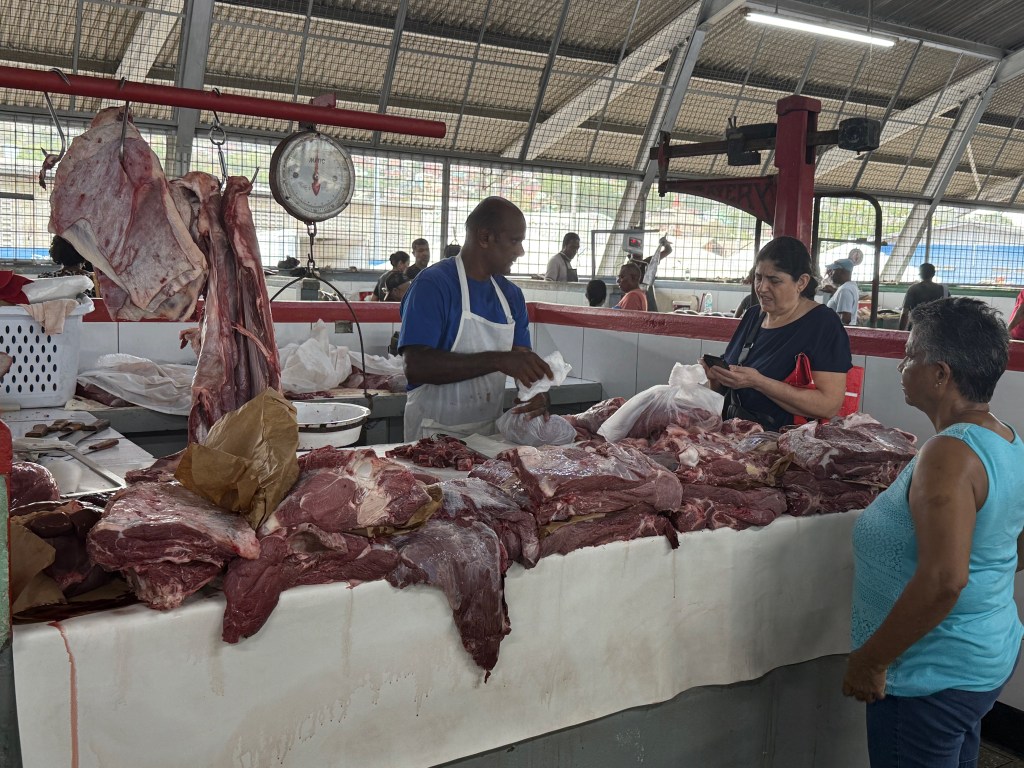
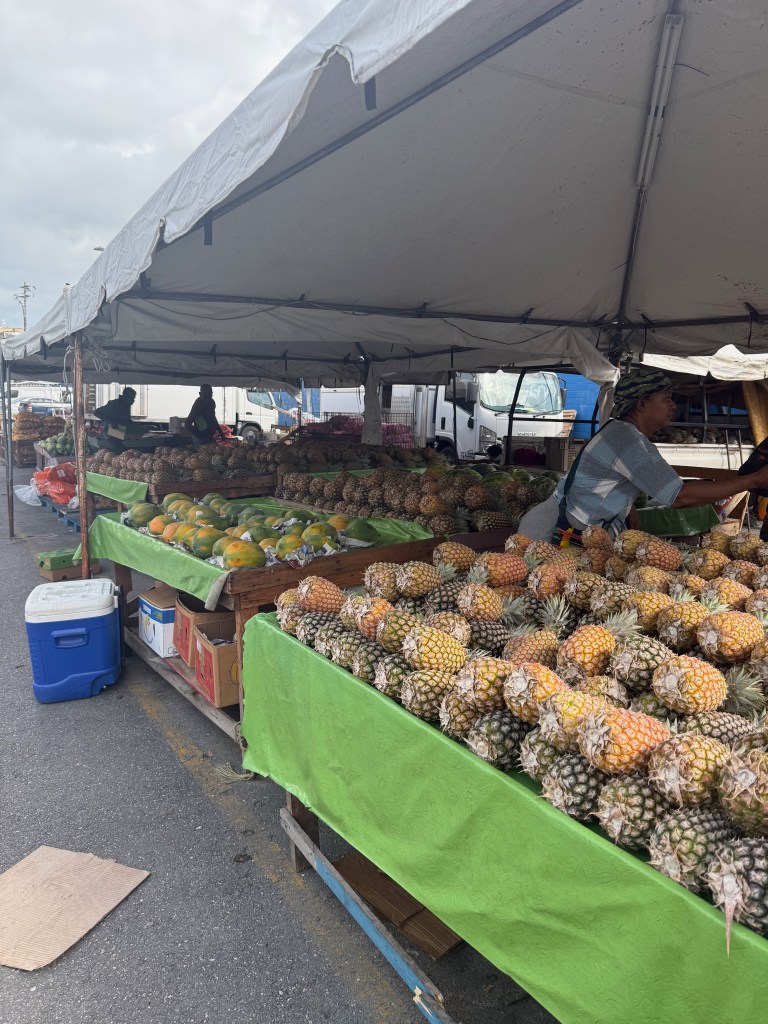
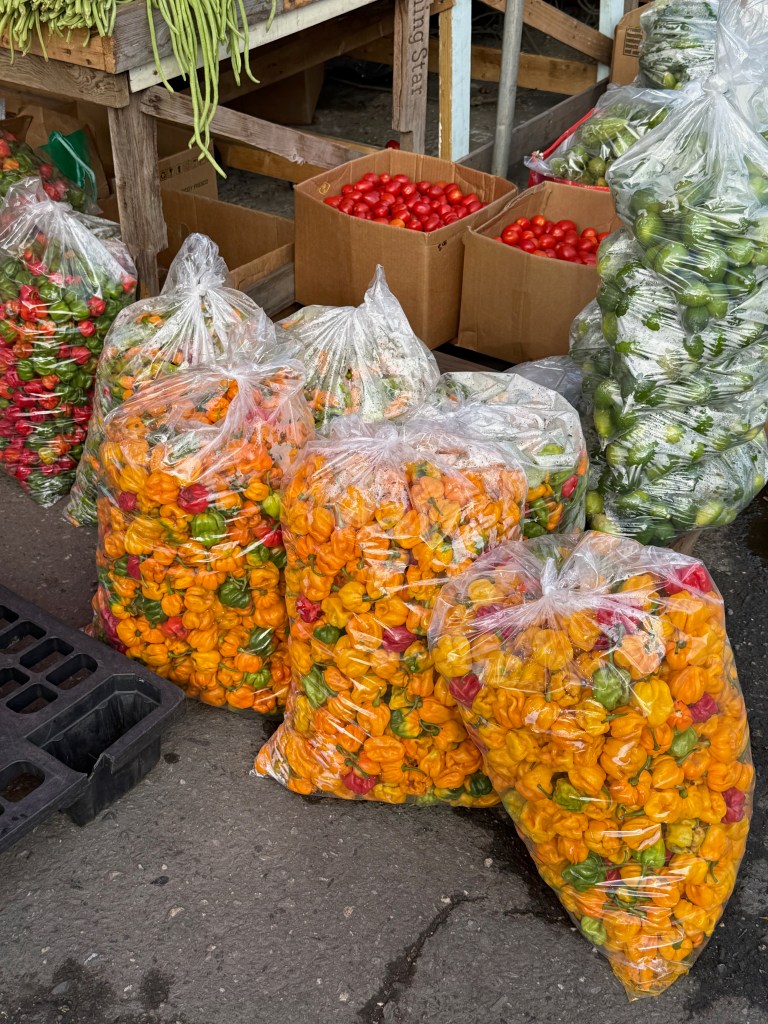
A local taxi driver called Jesse James runs a WhatsApp group for the local cruisers, and organizes trips. On the Saturday that we were here we went to the Fresh Market in Port of Spain. It was huge! There was a big hall full of stalls selling fish, chicken and meat, and then a couple of acres of fruit stalls. All we needed was a few limes, otherwise I’d have been tempted to come home with armfuls of fruit, veg and spices. Trinidad is a vibrant culture, with about 40% of the population being of African descent and another 40% Indian, from first slavery and then the cheap labor that was brought in when slavery ended.
Jesse organized a trip one night to see Leatherback Turtles laying their eggs on a beach on the northeast side of the island, a two-and-a-half hour drive away. This was a magical experience. A local volunteer group called Nature Seekers are focused on protecting this endangered species; they patrol the beach every night for the six months of nesting and hatching season and lead small groups to safely view the turtles while they nest. We waited at a ranger station until the patrols called in that a turtle had come in nearby and it was time to come and watch. We were amazed how big she was, and how close we were able to go without disturbing her.
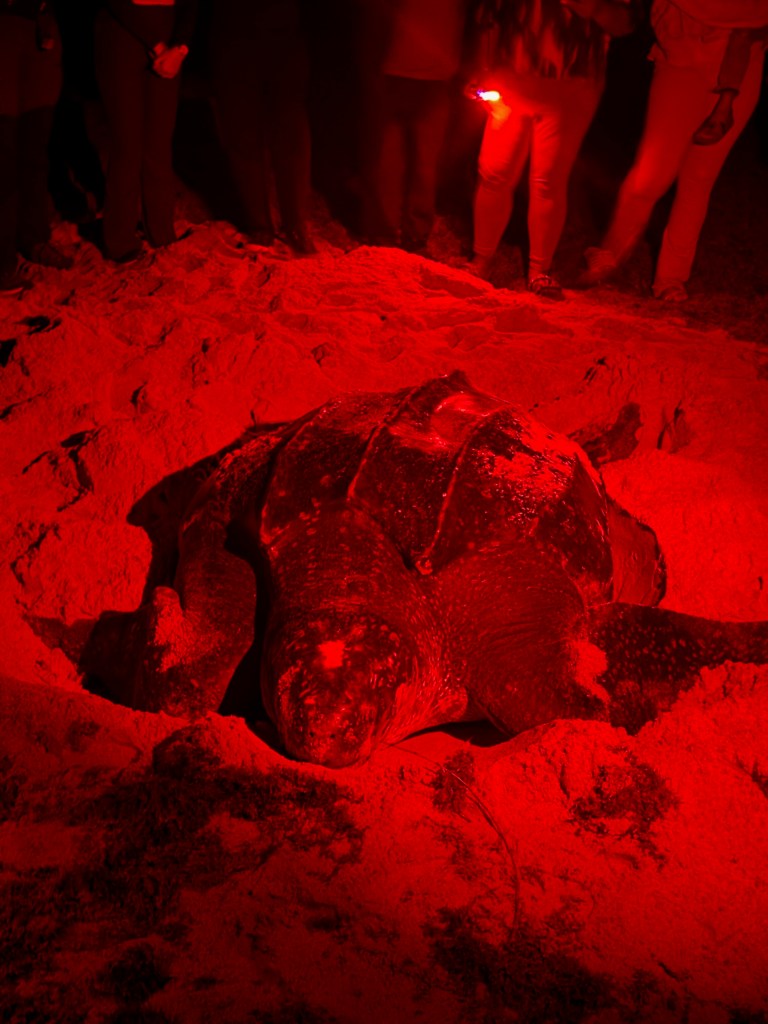
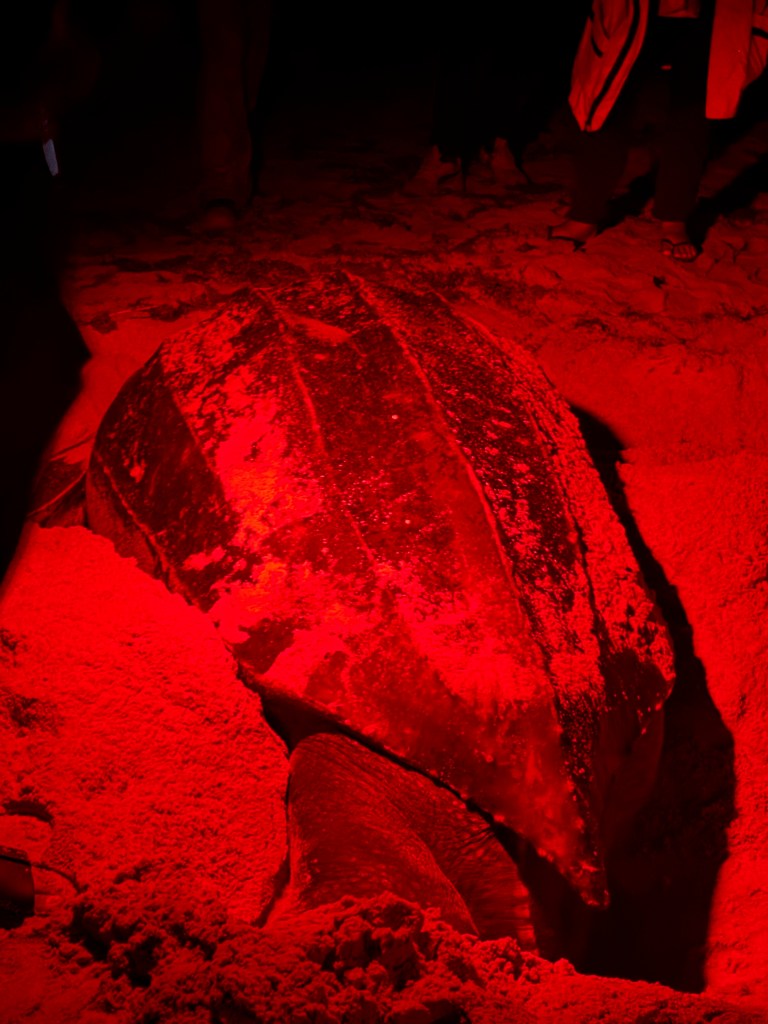
The turtles spend much of their lives in northwestern Atlantic waters and feed largely on jellyfish. (Fun fact: the jellyfish they eat feed on fish eggs; thus a healthy turtle population helps to support healthy fisheries.) The females make their way down to nesting sites in tropical waters, with Trinidad and Tobago being a major site for them. A female will make her way ashore at night, crawl up to a nesting site and use her rear flippers to excavate an egg chamber. She lays 80-120 eggs in the chamber, then covers it back up and tries to camouflage the nesting site before making her way back to the ocean. This process takes about 2 hours, and she will repeat it every 8-10 days over a couple of months, laying around 1000 eggs. Even then, only 1 or 2 of her eggs will become hatchlings that survive to adulthood. Our enthusiastic guides were eager to share their knowledge with us and we were fascinated to learn about these prehistoric-looking creatures.
Life in the boatyard has settled into a rhythm. The days are hot and humid so we start on boat projects early in the morning and end at lunch time. While there were various jobs we took on ourselves, we will also be working with local contractors to do some of the larger projects. Chasing them down takes a fair amount of Jeremy’s time. The yard is hauling out about 6 boats a day , providing plenty of entertainment! Fellow sailors we met over the past 6 months are based in the same hotel so there is generally an impromptu Happy Hour in the evening. All of the boatyards have their own restaurants, and there are local foodstands outside on the main road, so there is plenty of choice for meals. Lunch today was excellent “Doubles” which are curried chickpeas wrapped in naan.
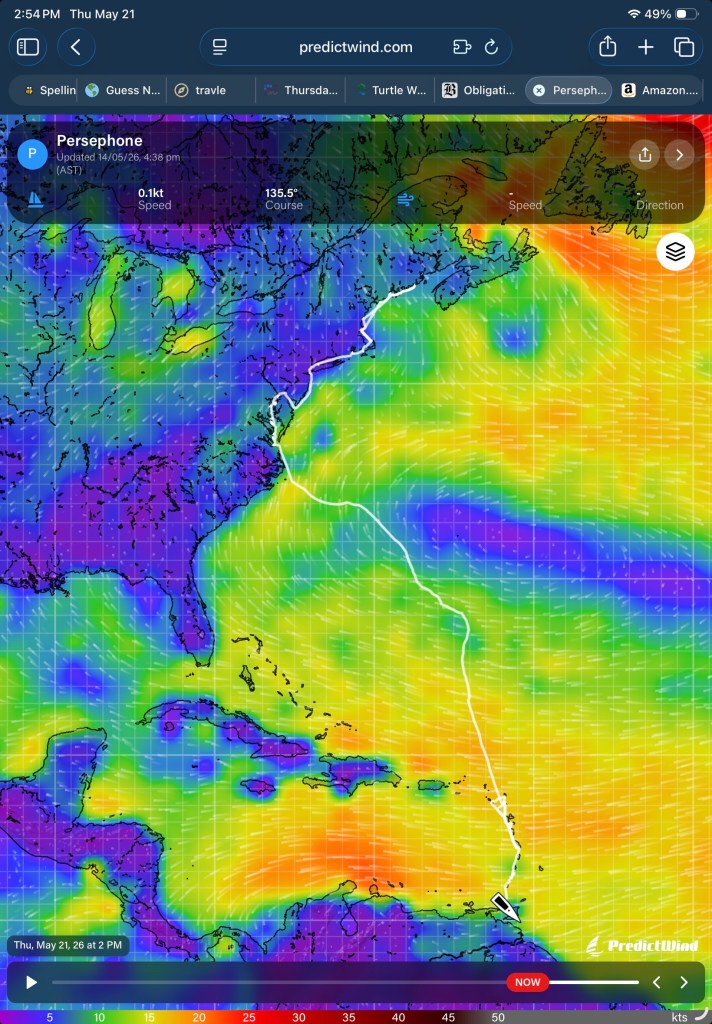
We leave for Boston tomorrow. We’ll have been gone for 242 days since leaving Marblehead in September. Since the boat went in the water last May our furthest point north was Roque Island in Maine, furthest east was Le Marin in Martinique, furthest west was Annapolis and of course in Trinidad we are now at our further point south, 10 degrees 40.82 minutes. We’ve covered 4014 miles since launch and 3424 miles since leaving Marblehead, and visited 11 countries, two of them for the first time. What a great season! Thank you to everyone who reads this blog and sends comments; we love hearing from you and look forward to seeing you soon.


2 responses to “May 12 – 22: Trinidad”
So many congratulations on your wonderful summer and on all the blogs and photographs you have posted to keep us up to date with all your adventures. We have hugely enjoyed travelling vicariously with you both through all the amazing islands and anchorages you have visited. Now you will have summer on land and will be planning your next huge trip. Enjoy the mangoes – my favourite fruit and we look forward to seeing you soon.
LikeLike
Thank you for sharing your journey with us! And WELCOME HOME!
Cheryl Byrne 978.837.0371
LikeLike